

Introduction
Ubiquiti UniFi has emerged as a popular choice among small businesses seeking reliable and scalable networking solutions. With a user-friendly interface and a suite of integrated products, UniFi offers comprehensive coverage and management capabilities. Its cloud-based controller allows for easy monitoring and configuration, making it particularly appealing for businesses without extensive IT resources.
UniFi's focus on providing robust wireless networking extends to its range of access points, switches, and security gateways. The products are designed to work seamlessly together, enabling businesses to create a holistic networking environment. Moreover, UniFi's affordability compared to traditional enterprise solutions allows small businesses to benefit from high-quality networking without breaking the bank. 
In addition to cost savings, UniFi provides a high level of customizability. Small businesses can tailor their networks to meet specific needs, whether that involves prioritizing bandwidth for certain applications or implementing guest networks. This flexibility, combined with easy scalability, positions UniFi as a compelling option for small enterprises looking to future-proof their network infrastructure.
Traditional enterprise networking has long been the standard for larger organizations, characterized by complex setups and higher costs. These networks typically require substantial investment in hardware and dedicated IT staff to manage and maintain the infrastructure. This approach can be a barrier for small businesses that lack the resources to support such systems.
Often, traditional solutions rely on proprietary hardware and software, which can lead to vendor lock-in and limited flexibility. While they may offer robust features, the complexity can overwhelm smaller teams, making it challenging to adapt to changing business needs or technological advancements. Furthermore, the high upfront costs can deter small businesses from investing in the necessary infrastructure.
Despite these drawbacks, traditional enterprise networks can still provide enhanced security and performance for organizations with the resources to manage them. For small businesses considering growth, understanding the limitations and advantages of traditional networks is crucial in making informed decisions about their networking strategy.
When comparing Ubiquiti UniFi with traditional enterprise networking, several key differences emerge. First and foremost, the cost structure diverges significantly. Ubiquiti offers a more affordable solution that doesn't sacrifice quality, allowing small businesses to allocate resources efficiently while still enjoying reliable networking.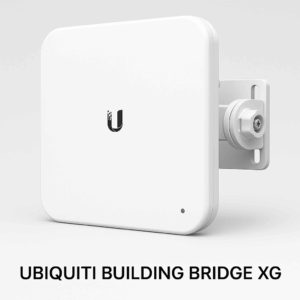
Moreover, the ease of use is a major differentiator. UniFi’s intuitive interface allows users to manage their networks without requiring extensive technical knowledge, whereas traditional networking solutions often necessitate specialized training or hiring skilled personnel. This accessibility can empower small business owners to take charge of their networks effectively.
Lastly, scalability is a vital consideration. Ubiquiti's modular approach allows small businesses to start with essential components and expand their networks as they grow. Traditional networks, in contrast, may require significant overhauls or additional investments to scale effectively, making them less adaptable to the evolving needs of smaller enterprises.
In conclusion, the decision between Ubiquiti UniFi and traditional enterprise networking hinges on a few critical factors: budget, ease of management, and growth potential. For many small businesses, Ubiquiti offers a compelling case with its cost-effective, user-friendly solutions that can adapt to changing needs.
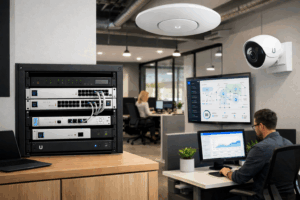 However, businesses must conduct a thorough assessment of their specific requirements and future goals. While UniFi may be ideal for many small enterprises, there could be instances where traditional solutions are appropriate, especially for those focused on robust security or requiring advanced features.
Ultimately, understanding the strengths and weaknesses of both options empowers small business owners to make informed decisions, ensuring a networking solution that aligns with their operational goals and aids in their growth trajectory.